
Exile and Habakkuk
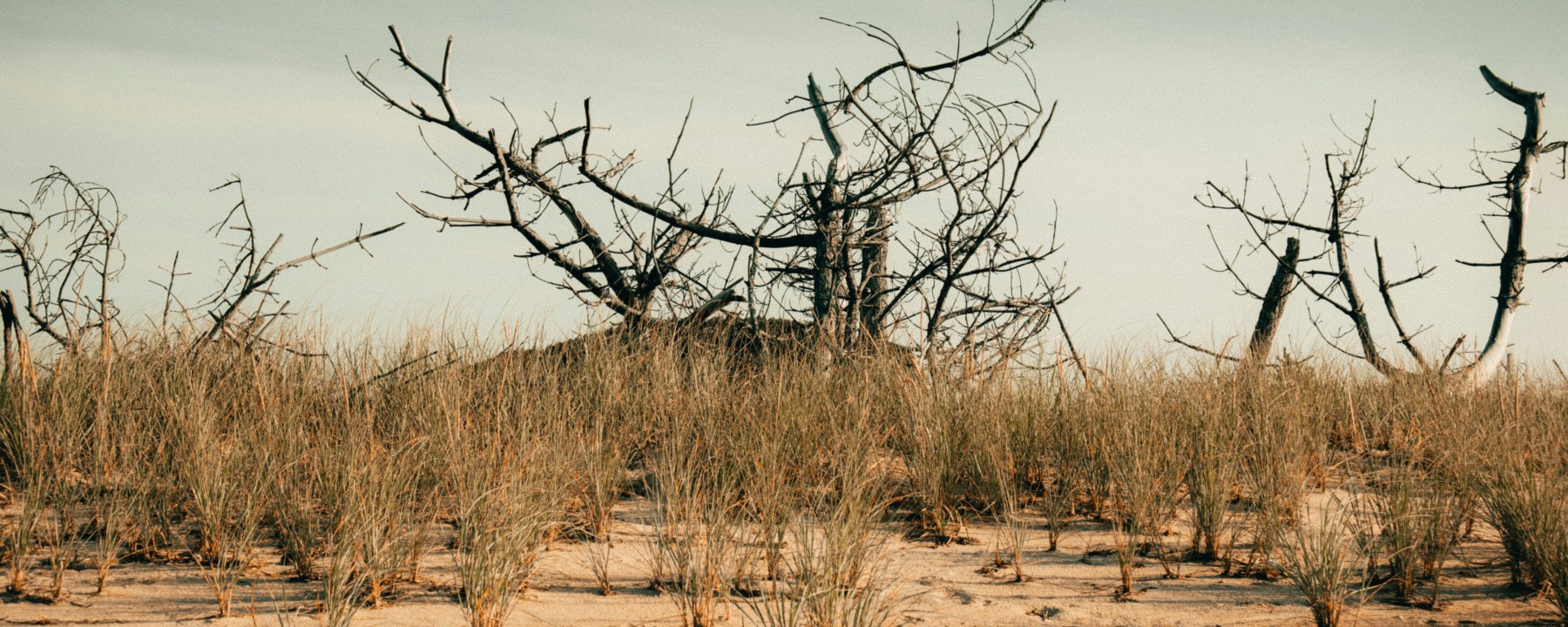
In the continuing saga of my gravely serious chest cold and its five-week reign of mucus terror, I’m sharing with you a biblical prayer that deeply spoke to me during that time. Perhaps it will speak to you as well.
Meeting Habakkuk
Grateful to my brother-in-law for the suggestion, I’ve been listening to The Bible in a Year Podcast with Fr. Mike Schmitz. I might be a little slow in picking up this popular podcast from 2021, but I believe I was meant to listen to it this year in particular, for it has been a great blessing to me. As I wrote about in my previous post, during my life-and-death battle with a serious chest cold — a chest cold that produced so much thick mucus that my disease-weakened muscles could not clear my airway when mucus plugs stopped my breathing — the podcast was covering the prophets, the time of the Babylonian exile. Isaiah, Habakkuk, Jeremiah, all told the people of Judah that the time of terror was coming, a time of violence, famine, and pestilence, when the enemy would be allowed to forcibly take those who survived out of their land and into exile. The story of the faithful would not end with death and destruction, however. God would bring them back to the fullness of life.
In my illness, I felt like I was in exile. Struggling and suffering, I no longer was living in my normal life. In fact, the invasion of mucus threatened to end my life. Mine was not as horrific as the siege that was laid upon the Judeans, but my future was uncertain as the future of God’s chosen people looked grim. But God promised to bring His people back. God promised that the exile would be the means of bringing back God’s people to true worship in the promised land.
I have come to see the exile of this sickness of mine as the means that God used to purify me and bring me back to truer and fuller worship of Him.
Although, over time there came within me the knowledge that God would bring me back to health and life, I still had to suffer through the ordeal. I still had to struggle, to lack, to want, to desperately need, to experience pain, devastating fatigue, and uncertainty. A familiar phrase from the Psalms was appropriate for me at this time, “How long, Lord? How long?”
And then one day, the podcast presented the third chapter of a lesser-known prophet, Habakkuk. I saw my own struggle in this sacred Scripture, my own fear, and my own hope. It gave me great encouragement and I remembered from it the essential need to wait quietly on the Lord.
Praying with Habakkuk
I was being attacked and ravaged by a virus. Fears, anger at myself, and overwhelming fatigue also assailed me during its reign. But God was always in control. This I knew deep down, in a sometimes mysterious, sometimes humorously playful way. Most of the time, however there was great fatigue and a wondering — over and over again — if the virus might not bring the end of my life on earth. Yet, somehow, I believed that God wanted me to live.
In the prayer of Habakkuk, he remembered the power and might of God who saved the people of Israel with marvelous works to bring them miraculously out of slavery in Egypt; who again and again wrought victory for the Israelites as they battled against overpowering enemies, against impossible odds. (Yes, many times I felt like I was up against overwhelming odds struggling against the congestion and airway blockages with my weak little muscles.) Facing the invasion of the Babylonians and the horrific ordeals that God’s people would endure, as well as his own fear and suffering, Habakkuk remembered and trusted in God’s mercy and power, in God’s steadfast love to save him even now in his distress, as he said to God,
“You pierced with your shafts the head of his warriors, who came like a whirlwind to scatter me, rejoicing as if to devour the poor in secret. You trampled the sea with your horses, the surging of mighty waters. I hear, and my body trembles, my lips quiver at the sound; rottenness enters into my bones, my steps totter beneath me. I will quietly wait for the day of trouble to come upon people who invade us.”
As he waits quietly for God to save him, Habakkuk’s surroundings, his current situation, seemed to say that there is no hope, there is no goodness, there is no future. How many times did doubt creep into my mind as I lied in bed exhausted, losing weight, sometimes even losing the will to go on? My family and my sister, as they looked upon me, sometimes could not see how I could get better. But that still, small voice within me said without words that I would. And so, these concluding words from Habakkuk’s prayer sang in my heart:
“Though the fig tree do not blossom, nor fruit be on the vines, the produce of the olive fail and the fields yield no food, the flock be cut off from the fold and there be no herd in the stalls, yet I will rejoice in the LORD, I will joy in the God of my salvation. GOD, the Lord, is my strength; he makes my feet like hinds’ feet, he makes me tread upon my high places.” [i]
No matter how loud the storm raged inside my chest, no matter how tightly closed the door of my airway, no matter how long I might go without breath or how exhausted of strength I might become, I waited quietly on the Lord. Again and again, I brought my mind back to trusting God. I just needed to lie back with those mucous plugs denying me air and let God work.
This quiet waiting upon the Lord was in itself a silent rejoicing in the steadfast love of the Lord, who is my strength.
© 2024 Christina Chase
Feature Photo by Billy Freeman on Unsplash
[i] Habakkuk 3: 14-19 (RSV)
Categories

Christina Chase View All
Although crippled by disease, I'm fully alive in love. I write about the terrible beauty and sacred wonder of life, while living with physical disability and severe dependency. A revert to the Catholic faith through atheism, I'm not afraid to ask life's big questions. I explore what it means to be fully human through my weekly blog and have written a book: It's Good to Be Here, published by Sophia Institute Press.
 Christina Chase
Beautiful as always!
LikeLiked by 2 people
agree- beautiful-!!!❤️
LikeLiked by 1 person