
My Tough Mother
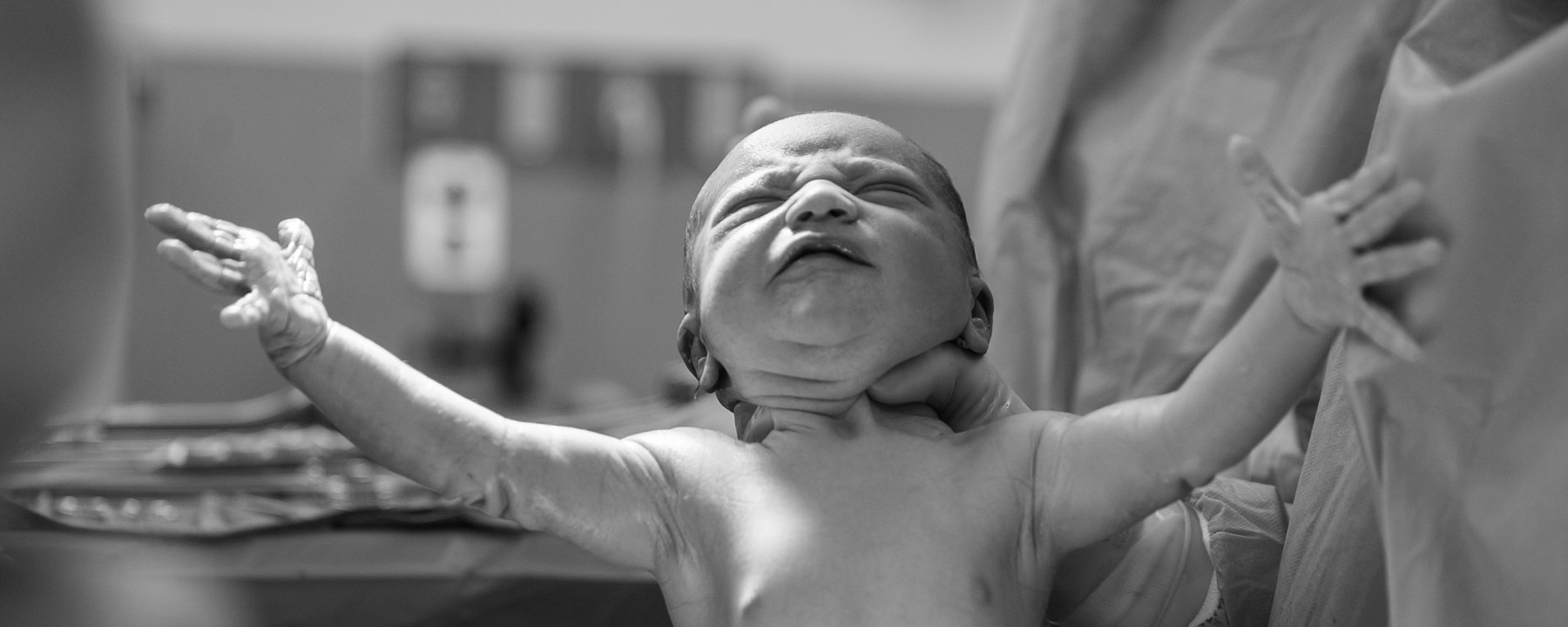
A tribute to my mother for Mother’s Day. Wait for it…
In Eden, before Adam and Eve fell from grace, was there no pain?
Some classic Christian theology suggests that when the first human beings went against God’s will, not only did sin and death enter the world but also sicknesses like cancer, the flu, and SMA. Of course there is no way to definitively answer this question in this life, but in my understanding, I think there were always going to be genetic mutations, viruses, and pain, just like there were always going to be limitations of the human body. The Bible seems to clearly indicate that there was, indeed, pain in Eden, before the Fall. For after disobeying God and eating from the tree of the knowledge of good and evil, God tells Eve the consequence of her going against God’s will, saying to her, “I will greatly multiply your pain in childbearing.”
The multiplication or nothing would be nothing, so pain must have existed before the Fall.
Pain would have been useful in Eden before the Fall, preventing Adam and Eve from doing things that would mar or injure their bodies, just as it can do for little children. In childbirth, the woman’s muscles greatly contract and the baby moves within her, ultimately exiting through the rather narrow birth canal. Reasonably, naturally, we see that there would be pain involved in this. But the pain is purposeful and lets the woman know what’s happening.
I do wonder if the multiplication of labor pain for Eve, and all women after Eve, has more to do with suffering than with pain. Pain is that hard, physical, primal hurting of our bodies, while suffering has more to do with emotions, psychology, the ordeal that surrounds the pain. So, perhaps, the result of the Fall was not the new existence of pain for humans, but the new existence of suffering.
Becoming Our Mother
Taking my mother as an example, she, in the beginning of the 1970s, chose to deliver her first child, my sister, naturally. She wanted to give birth without any kind of drugs, anesthesia, or medication at all. She and my father attended Lamaze classes, which were new enough that the staff at the hospital did not know what they were. When my mother began labor and my parents went to the hospital in Manchester, the nurse would not let my father into the room — even though, in Lamaze, the father acts as a birth coach and a literal as well as figurative support. Then when my mother asked the doctor if she should push, he seemed as though he didn’t care what she did, since she obviously wanted to put him out of a job. My sister was presenting sunny side up (occiput posterior position), that is, she was facing forward instead of toward the back, so every time my mother pushed, it was to no avail. With my mother exhausted him, the doctor took over with forceps and pulled my sister out.
Still, through it all, my mother did not scream. She did not cry out with the pain because she knew there would be pain and accepted the fact that there would be pain. She knew what was causing the pain (except for the posterior position) and she did her very best to work with the pain, knowing that there would be a great reward at the end. Women in the maternity ward actually stopped by to see my mom, wanting to see the woman who gave birth without medication and without screaming.
Three years later, my parents went to the same hospital, my mother preparing to give birth to me. This time, the very same nurse not only let my dad into the room, but gave her to him watch to help him keep track of the contractions. Because I was sunny side up like my sister, my mother had intense back labor and then the progression of the labor stalled. So she was given Pitocin, which ramped up her painful contractions, with no rest in between. Still, she went through it without any painkillers, anesthesia, or medication of any kind. When the doctor noticed that I was sunny side up, he told her to stop pushing so that I could roll over within her. She said that not pushing was harder than pushing, but still, she did not scream, still, she accepted the pain, bearing up bravely for an hour with contraction after contraction. She did keep asking the doctor, “Can I push now? Can I push now?” all while having to wait, enduring the pain while trying to relax her body. My mother is an amazing woman! She was finally rewarded when she felt me flip over within her, and she was free to push me into the world.
The Lamaze technique did not lessen the pain — it was certainly painful — but it did mitigate the suffering. My mother knew the purpose of the pain and she did not fight against it.
I experienced something like this myself when I suffered from severe abdominal pains caused by benign uterine tumors. I hated the pain. I knew why there was pain, but there was no practical reward that would come from it, like holding a newborn baby. Still, I let that hate get the better of me, screaming and raging against the pain, fighting against the pain, and that suffering just made the pain feel worse. It was only when I accepted the pain, which I knew would be over in a few hours, when I breathed with it and tried to relax into it that my suffering lessened. I prayed fervently during many of those times, but then just had to trust and let it be, let the pain run its course. Even better were those very rare moments (very, very rare) when I offered the pain to Jesus, asking for it to be taken into His pain on the Cross for the salvation of souls — the birthing of souls into Paradise.
Christian theology teaches us that Christ’s pain had purpose and we, as Christians, can offer our pain to Christ for His purposes, mysterious, holy, and good.
Trusting through Pain
The pain of childbirth clearly has purpose. As does the pain of rehabilitation therapy, life-saving surgeries, etc.. It is sometimes difficult, however, to acknowledge the purpose and not the pain. The purpose of pain can be very fruitful, which is not a far-fetched notion, as people who push themselves in the gym can attest. If we work with the pain, then we can endure it without extra suffering, and then we can experience the rewards joyfully, as in childbirth. Or as in dying.
Don’t get me wrong — I’m not against painkillers in any way. (As I said, my mother and others like her are amazing.) I’ve been receiving an injection for nine years to shrink those uterine tumors of mine and stop the pain. Of course, I can’t stop all pain. My hope is that you and I can learn not to fear it quite so much, that you and I can learn not to make matters worse through worry, angst, and self-pity. God gives us people to help us, to help bring us physical and emotional healing when possible, and to comfort us and encourage us with their caring and their loving presence. People, angels, the Holy Spirit. Like Veronica who wiped the face of Jesus as He labored toward His death, sometimes God gives us others to help us see the path ahead, as well as to accept God’s will and trust in fruitful reward. Trust is what was lost by Adam and Eve in the Garden of Eden when they broke away from the will of God and consumed the experience of suffering.
To say and mean, “Jesus, I trust in You” is everything.
Lord, have mercy on me.
To my Mama may I say, “I love you! You are an inspiration of strength and perseverance to me, as well as my daily comfort, guidance, and support. May my little life bring honor to you.”
© 2026 Christina Chase
Feature
Categories

Christina Chase View All
Although crippled by disease, I'm fully alive in love. I write about the terrible beauty and sacred wonder of life, while living with physical disability and severe dependency. A revert to the Catholic faith through atheism, I'm not afraid to ask life's big questions. I explore what it means to be fully human through my weekly blog and have written a book: It's Good to Be Here, published by Sophia Institute Press.


Christina, that was the most beautiful heartfelt post! (ALL)Your writings touch me in so many ways. I have printed many of them to read and reflect on. thank you ! 🩷Theresa
LikeLiked by 1 person